
This mini-review series is to share updates about things I recently read or watched, and what aspects of them I’d like to see in my manuscript wishlist.
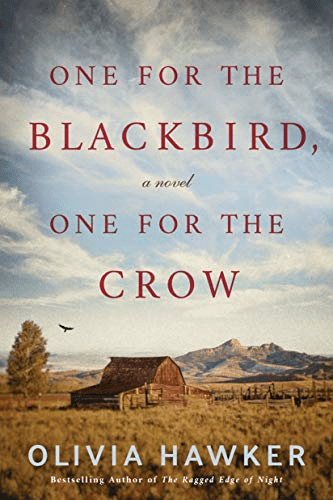
I was gifted a copy of this book when I was doing agent-editor networking meetings in 2019 and I’ve just only read it now. Better late than never, huh?
One of my clients turned in a historical fiction manuscript so I have been reading historical fiction again to get into that “mindset” so I can provide useful notes to her and it’s been great to discover different time periods.
Book Description:
From the bestselling author of The Ragged Edge of Night comes a powerful and poetic novel of survival and sacrifice on the American frontier.
Wyoming, 1876. For as long as they have lived on the frontier, the Bemis and Webber families have relied on each other. With no other settlers for miles, it is a matter of survival. But when Ernest Bemis finds his wife, Cora, in a compromising situation with their neighbor, he doesn’t think of survival. In one impulsive moment, a man is dead, Ernest is off to prison, and the women left behind are divided by rage and remorse.
Losing her husband to Cora’s indiscretion is another hardship for stoic Nettie Mae. But as a brutal Wyoming winter bears down, Cora and Nettie Mae have no choice but to come together as one family—to share the duties of working the land and raising their children. There’s Nettie Mae’s son, Clyde—no longer a boy, but not yet a man—who must navigate the road to adulthood without a father to guide him, and Cora’s daughter, Beulah, who is as wild and untamable as her prairie home.
Bound by the uncommon threads in their lives and the challenges that lie ahead, Cora and Nettie Mae begin to forge an unexpected sisterhood. But when a love blossoms between Clyde and Beulah, bonds are once again tested, and these two resilient women must finally decide whether they can learn to trust each other—or else risk losing everything they hold dear.
Things I Liked and Now Want for My MSWL:
- Atmospheric setting – while I would never want to be a pioneer during the 1800s, the time period and setting were truly evocative and it made me feel like I was right there with the characters
- Beautiful prose – It’s hard to pin down what exactly made the prose here beautiful to me but I think it was connected to capturing the atmospheric setting. Olivia Hawker has a talent for pulling poetry out of the descriptions of the prairie and the ordinary drudgery of frontier life. I believe I am like Cora; I am built for cities and society. But through the beautiful descriptions of the Wyoming frontier, particularly through Beulah’s POV, I can see the beauty in the nature even though it’s only in my mind’s eye.
- “Maybe it’s magic, maybe it’s mundane” – Beulah’s deep, emotional connection to the land causes other characters to wonder if she might be a witch and there are things that Beulah knows that just seem to have a downright supernatural explanation. I like that the book never tries to explain whether Beulah does have a magical ability or if she’s just so much of a dreamer that she feels something magical in the land. I think the unknowingness (is that a word?) makes the reader reconsider how much of the mundaneness in our life might posses similar magic.
- Book club discussion fodder – Tied to above, I greatly enjoyed this book for containing so much to talk about. I mean, the premise of the novel begins with the question, “Should a woman take in the woman who cheated with her husband so the other woman’s childrens don’t starve in the winter?” which is sure to kick off a lot of AITA debates. But as the novel goes on and you learn about these characters, you understand what informs their decisions even if you wouldn’t necessarily make the same choice.
- Complicated female characters – I really loved that both Cora and Nettie Mae had their faults and their strengths. You could never truly dismiss one in favor of the other and because of their complexity, you can see how–against all odds–these two form an unlikely friendship.
 Susan Velazquez Colmant
Leave a comment